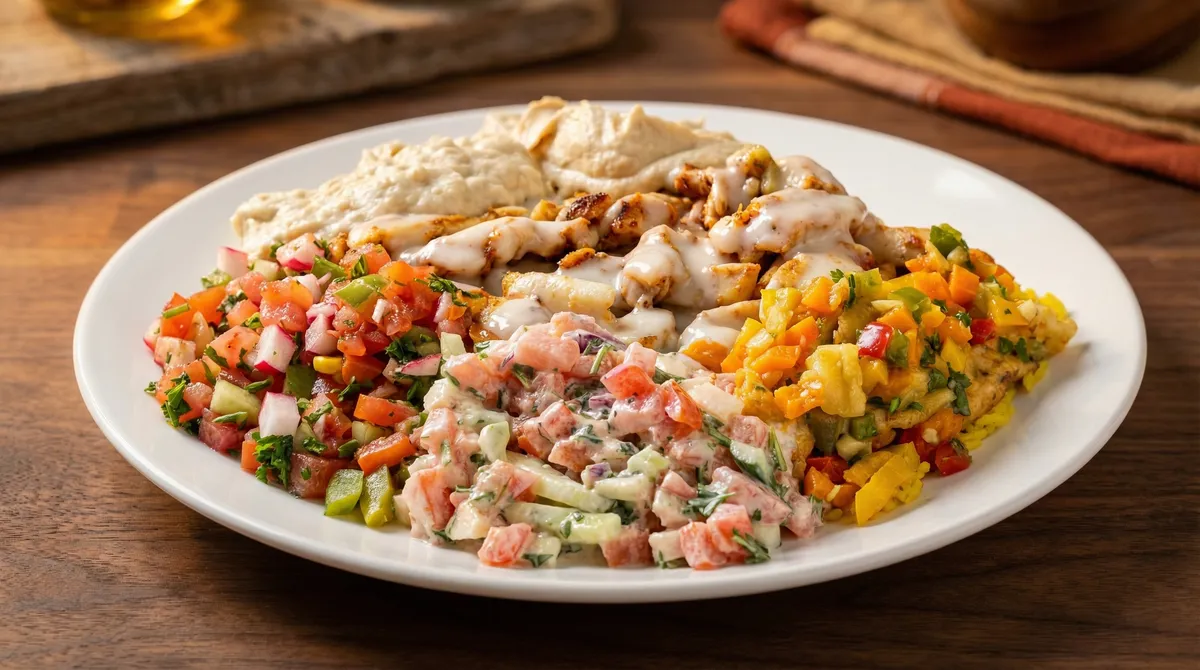
Shawarma vs Gyro: What's the Difference?

Ray Aqel has been preparing Mediterranean and Palestinian cuisine for over 15 years. He opened Pita Kabab in Cedar Rapids in 2025 to share family recipes passed down through generations. Ray is also the owner of Captain's Fish and Chicken in Cedar Rapids.
Reviewed by Ray Aqel, Owner
TL;DR
Shawarma is Middle Eastern with warm spices (cumin, coriander, cardamom) and garlic sauce or tahini. Gyro is Greek with herbs (oregano, garlic) and tahini. Both use a vertical rotisserie but taste distinctly different.
Shawarma and gyro are two of the most popular dishes in Mediterranean and Middle Eastern cuisine. They share a lot in common — both feature seasoned meat cooked on a vertical rotisserie and served in flatbread — but they come from different culinary traditions and taste quite distinct from each other. If you’ve ever stood at a menu wondering which to order, this guide breaks it all down.
This guide is for anyone ordering at a Mediterranean restaurant who wants to understand exactly what makes these two dishes different. We cover origins, preparation, seasoning, sauces, and which to order based on your preferences. For a broader overview of Mediterranean dining, see our first-timer’s guide.
What Is Shawarma?
Shawarma is a Middle Eastern dish with roots in the Levant region — think Lebanon, Syria, and surrounding countries. It is made by stacking seasoned meat (usually chicken, beef, or lamb) on a vertical spit and slow-roasting it for hours. Thin slices are carved from the outer layer as it cooks. Shawarma is typically served in a pita or wrap with toppings like garlic sauce (toum), tahini, pickled vegetables, and fresh tomatoes.
The spice blend is what sets shawarma apart. Common shawarma spices include cumin, coriander, turmeric, cinnamon, allspice, and cardamom — giving it a warm, earthy, slightly sweet flavor profile. The result is deeply aromatic meat with a tender, juicy interior.
What Is a Gyro?
A gyro (pronounced “YEE-roh”) is a Greek dish that follows the same vertical-spit cooking method but with a different seasoning tradition. Traditional gyro meat is made from ground or sliced pork, chicken, or lamb, seasoned with garlic, oregano, rosemary, and thyme — herbs that are distinctly Mediterranean in character.
A gyro is typically served in a warm pita with tahini (a smooth sesame-based sauce), onions, tomatoes, and sometimes french fries. The herb-forward seasoning and smooth tahini give gyros a brighter, fresher flavor compared to shawarma’s deeper, spiced warmth.
Shawarma vs Gyro: Side-by-Side Comparison
| Feature | Shawarma | Gyro |
|---|---|---|
| Origin | Middle East (Levant region) | Greece |
| Typical Meat | Chicken, beef, or lamb | Pork, chicken, or lamb |
| Key Spices | Cumin, coriander, turmeric, cardamom, cinnamon | Garlic, oregano, rosemary, thyme |
| Sauce | Garlic sauce (toum) or tahini | Tzatziki (traditional) or tahini (at Pita Kabab) |
| Toppings | Pickled vegetables, tomatoes | Onions, tomatoes, sometimes fries |
| Flavor Profile | Warm, earthy, aromatic | Bright, herby, tangy |
| Served In | Pita, wrap, or bowl | Pita or wrap |
How the Meat Is Prepared
Both dishes use a vertical rotisserie — a cooking method that allows fat from the top of the meat stack to baste the layers below as it cooks, keeping the meat moist throughout. The difference is in the marinade and the cut.
Shawarma meats are often marinated for many hours before cooking. The spice mixture penetrates deep into the meat, so every bite carries that full flavor. For chicken shawarma in particular, the combination of acidic marinade and warm spices creates an exceptionally tender result.
Gyro meat — especially the traditional Greek-style version — is often made from ground meat that is pressed and formed into a loaf around the spit, giving it a uniform texture and ensuring seasoning is evenly distributed throughout.
Which Should You Order?
The honest answer is: it depends on what kind of flavor you’re in the mood for.
Order shawarma if:
- You enjoy bold, complex spice combinations
- You prefer a deeper, richer flavor
- You want a garlic sauce or tahini-based condiment
Order a gyro if:
- You prefer herb-forward seasoning that’s lighter and fresher
- You enjoy a smooth, nutty sauce like tahini
- You want something closer to Greek flavors
If you’re visiting Pita Kabab for the first time and genuinely can’t decide, the chicken shawarma is a great entry point — the spices are approachable without being overpowering, and the garlic sauce is made in-house. The gyro is equally popular and comes with a generous drizzle of tahini that complements the richness of the meat.
Both options come in pita ($9.99), wrap ($10.99), or bowl format at Pita Kabab. The bowl is worth trying if you’re looking for a bigger meal or want to skip the bread.
Regional Variations
Shawarma and gyro have both evolved as they have traveled around the world. Palestinian shawarma tends to use more warm spices and a tangy garlic sauce (toum). Turkish shawarma (known as doner) leans heavier on paprika and is often served with yogurt. Egyptian shawarma frequently includes tahini and pickled turnip.
Greek gyro traditionally uses pork, which is uncommon in American versions. Most gyro restaurants in the United States, including Pita Kabab in Cedar Rapids, use a beef-and-lamb blend. The sauce also varies — authentic Greek gyros come with tzatziki (yogurt and cucumber), while many American Mediterranean restaurants serve gyro with tahini or garlic sauce instead.
At Pita Kabab, both the shawarma and gyro reflect Palestinian preparation traditions — the shawarma is marinated in a seven-spice blend and slow-roasted on a traditional vertical spit, while the gyro uses a seasoned beef-and-lamb blend with tahini sauce.
Trying Both at Pita Kabab in Cedar Rapids
At Pita Kabab (3100 6th St SW, Cedar Rapids, IA), both shawarma and gyro are made with halal-certified meat. The beef and chicken shawarma are priced at $9.99 for a pita and $10.99 for a wrap, with bowls starting at $14.99. The gyro comes in at the same price points.
If you’re feeding a group — whether it’s an office lunch or a family gathering — both dishes are available for catering. It’s a reliable way to offer variety without complicating the order, since most people have a preference for one or the other.
Hours are Monday through Friday 10AM–8PM and Saturday 10AM–7PM.
Frequently Asked Questions
Is shawarma the same as a gyro?
No. Shawarma and gyro are similar in cooking method — both use a vertical rotisserie — but they come from different culinary traditions. Shawarma is Middle Eastern and uses warm spices like cumin, coriander, and cardamom. Gyro is Greek and is seasoned with herbs like oregano and garlic, served with a yogurt-based sauce in Greece, though many American restaurants (including Pita Kabab) serve it with tahini.
What does shawarma taste like?
Shawarma has a warm, deeply spiced flavor with earthy and slightly sweet notes from spices like cumin, turmeric, and cinnamon. The meat is tender and aromatic, and the garlic sauce or tahini adds richness. It is less herby and more spice-forward than a gyro.
What is the difference between shawarma and gyro sauce?
Shawarma is typically served with toum (a thick, fluffy garlic sauce) or tahini (sesame paste). Traditional Greek gyros use tzatziki (yogurt and cucumber), but at Pita Kabab both shawarma and gyro come with your choice of garlic sauce or tahini. The sauces are quite different in flavor — toum is punchy and garlicky, while tahini is smooth, nutty, and rich.
Allergen Notice: Pita Kabab uses sesame, sesame oil, wheat, eggs, milk, tree nuts, and fish in our kitchen. Dishes may contain or come into contact with these allergens. If you have a food allergy or sensitivity, please inform our staff when ordering so we can help you choose safely. For questions, call us at (319) 440-3709.